
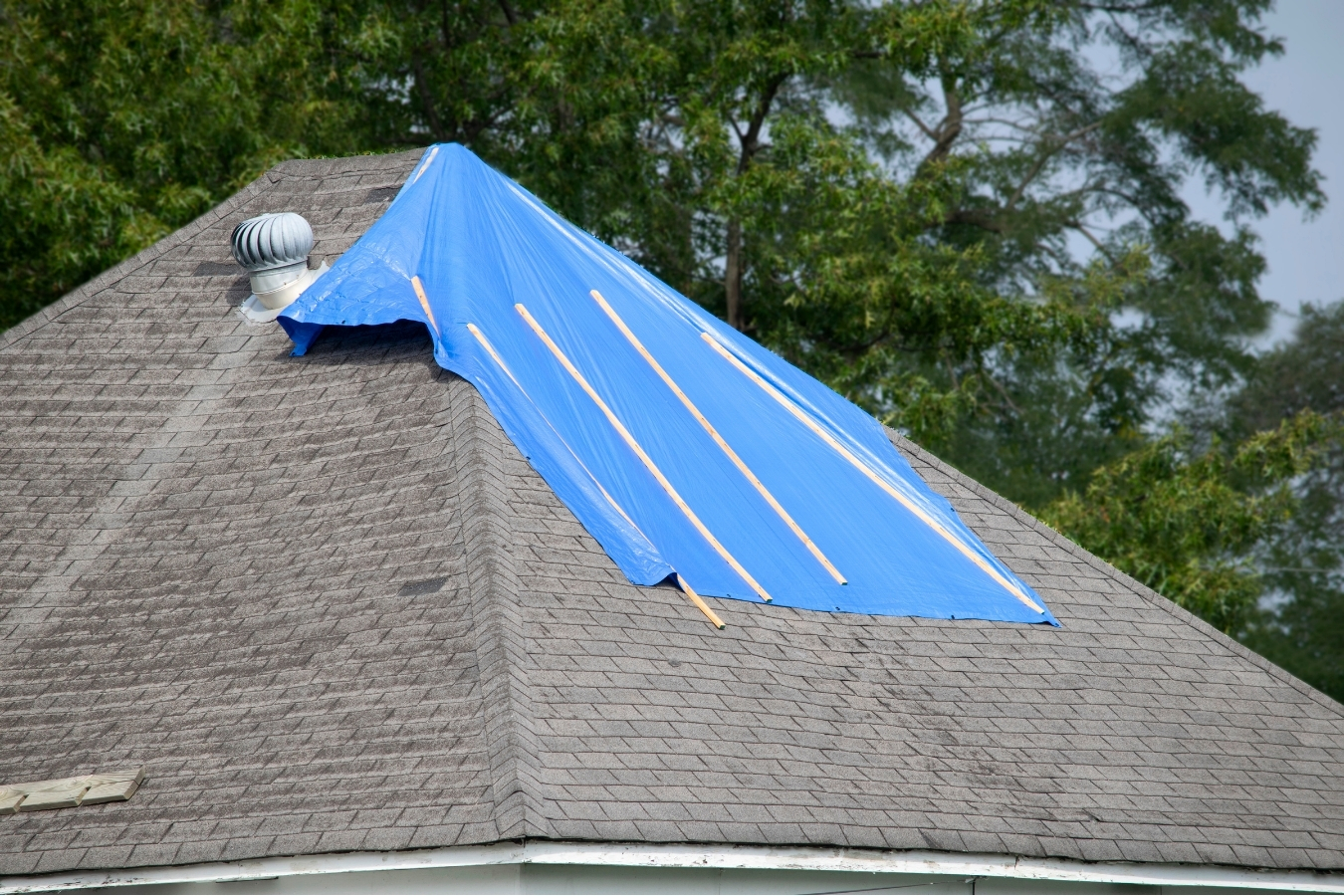
Active roof leaks and storm damage
Not every roofing problem is an emergency, and treating a minor one as though it is usually costs you money. These are the situations worth calling about straight away:
- Water actively coming into the house during or right after a storm
- Shingles torn off leaving the roof deck or underlayment exposed to weather
- A tree limb, branch or debris that has struck or punctured the roof
- Wind damage along a ridge, edge or valley that will get worse in the next weather
- A ceiling sagging or bulging where water has collected above it
If what you have is a stain that appeared last month, a few missing shingles on a dry week, or a roof you're simply worried about, our roof repair page is the right starting point — you'll get a proper diagnosis rather than a rushed patch.
Call to discuss current availability
We won't publish a guaranteed response window, because a roofing company that's honest about Montana weather can't hold one. What we will do is pick up, ask you what's happening, and tell you what's realistic — whether that's later today, tomorrow morning, or after a storm front passes and it's safe to be on a roof.
Call (406) 551-9397. During heavy weather the phone is far faster than a form.
Temporary protection and permanent repairs
These are two different jobs and it's worth understanding the difference.
Temporary protection is about stopping water getting further in — most often covering the damaged area so the interior, insulation and framing stop taking on water. It is not a repair, it isn't meant to last, and it can only be done when weather and roof conditions make it safe to work up there.
The permanent repair comes afterwards, once conditions allow and we have the right materials. That's when the failed detail actually gets rebuilt — flashing, decking, shingles and underlayment as needed. Depending on how much of the roof is affected, that conversation sometimes turns into a replacement rather than a repair, and we'll show you why if it does.
What information to have ready
Having these to hand when you call speeds everything up:
- The property address and how to get access
- What you're seeing, and where inside the house you're seeing it
- When it started, and whether it's still getting worse
- Roughly how old the roof is, and what it's covered with, if you know
- Whether you intend to make an insurance claim
- Photographs taken from the ground or from inside
One thing we'd ask: don't climb onto the roof. A wet, damaged or wind-exposed roof is genuinely dangerous, and there is nothing you can usefully do up there that's worth the risk. Photograph what you can from the ground and from inside, and leave the rest to us.
If storm damage may be part of an insurance claim, our storm and hail damage page and insurance claim support page cover what to document.
Urgent roofing questions
How quickly can you get here?+
Call and ask — that's the honest answer. It depends on the time of day, the weather and how many other properties are affected by the same storm. We'll tell you what we can actually do rather than promise an arrival time we can't hold.
Will you do the full repair on the first visit?+
Usually not. The first visit is about stopping water getting further in. The permanent repair happens once the weather allows and we have the right materials on hand to do it properly.
What should I do while I wait?+
Work from inside. Move furniture and electronics clear, put a container under an active drip, and if water is pooling above a ceiling, a small relief hole in a controlled spot causes less damage than a collapse. Don't go up on the roof.
Does insurance cover emergency work?+
Many policies cover reasonable steps taken to prevent further damage, but that's between you and your insurer. Keep receipts and photographs of the damage before and after any temporary work.